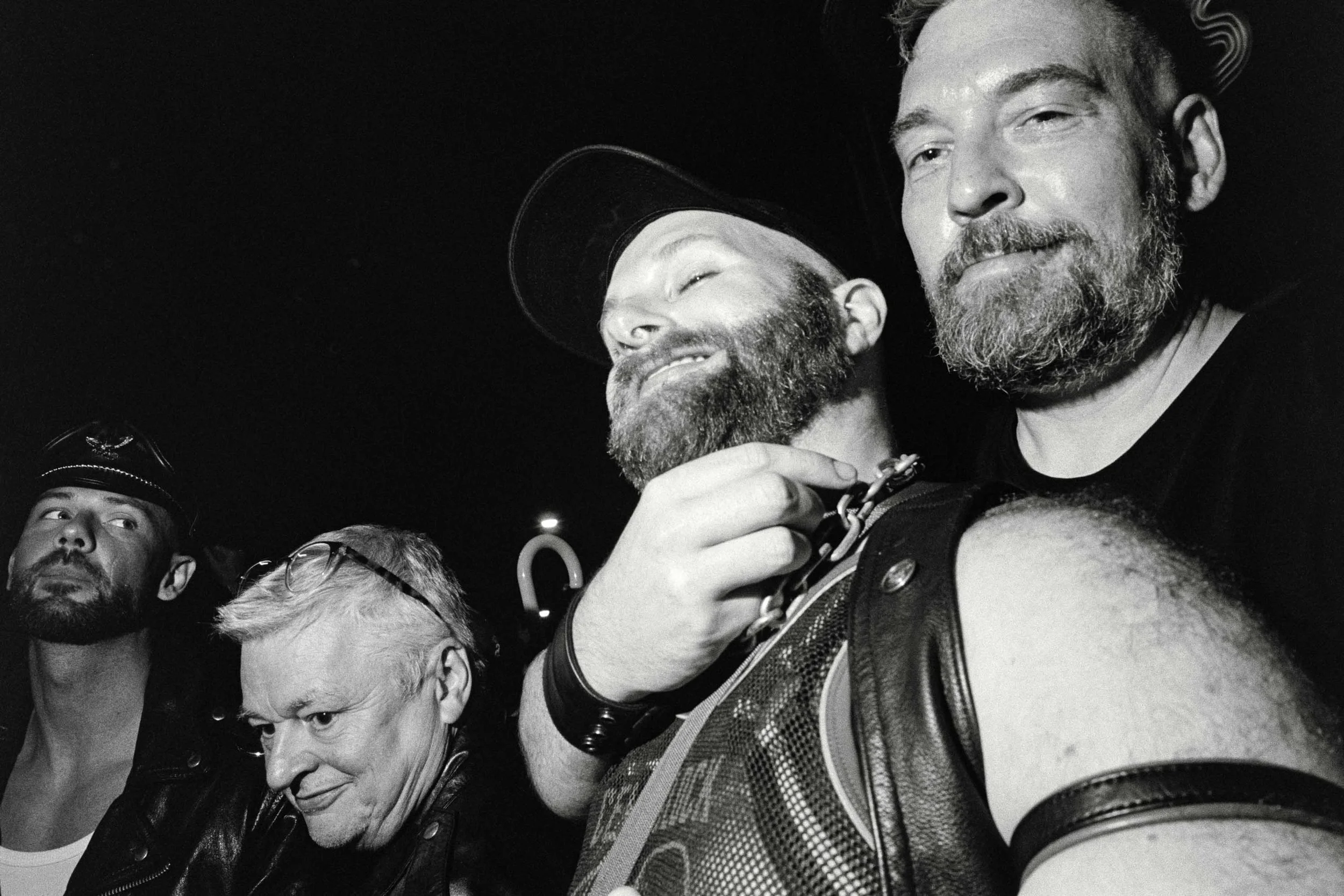
Robert Watson, Manchester Pride. 2026
At Manchester Pride it’s almost impossible to make pictures without the subject noticing and reacting to the camera. It’s as if everyone there is pre programmed to react instantaneously to the motion of a camera rising to frame the scene. Some of these subconscious responses to the camera do, however, result in the most fascinating of pictures. They are a person’s instant reaction to being photographed.
These aren’t really the photographs I seek though (and definitely not the parade) and this is what makes Pride surprisingly difficult to photograph.Yes, it’s very easy to take photographs at the event but it’s hellishly difficult to take meaningful ones. These reactive photographs have the effect of highlighting the pictures where the subject isn’t prepared and doesn’t react until the picture is taken. All dressed up yet looking rather ordinary in their expression. Oblivious to my presence.
The real pictures for me come from the precise moment in between when someone realises they are about to be photographed and me pressing the shutter button. The only question is can I be fast enough to capture that moment between eye contact and reaction? This is true of all my street photography. Whether it be at a Pride event or anywhere else in the world. I can’t remember who said this but the best street photography pictures are taken the moment just before an apology is necessary. This is how I like to work. Getting close enough that an apology may be necessary. At a Pride event where photography is expected, no apology is needed; on the streets where it may come as a shock to a subject, I often add a polite thank you to the moment just after the shutter is fired. That usually confuses and diffuses any form of confrontation that could arise. By the time a person has processed what has just happened, I’m too far away to bother trying to talk to. My process isn’t about standing rooted to one spot and waiting for pictures to happen. I take a picture and move on.
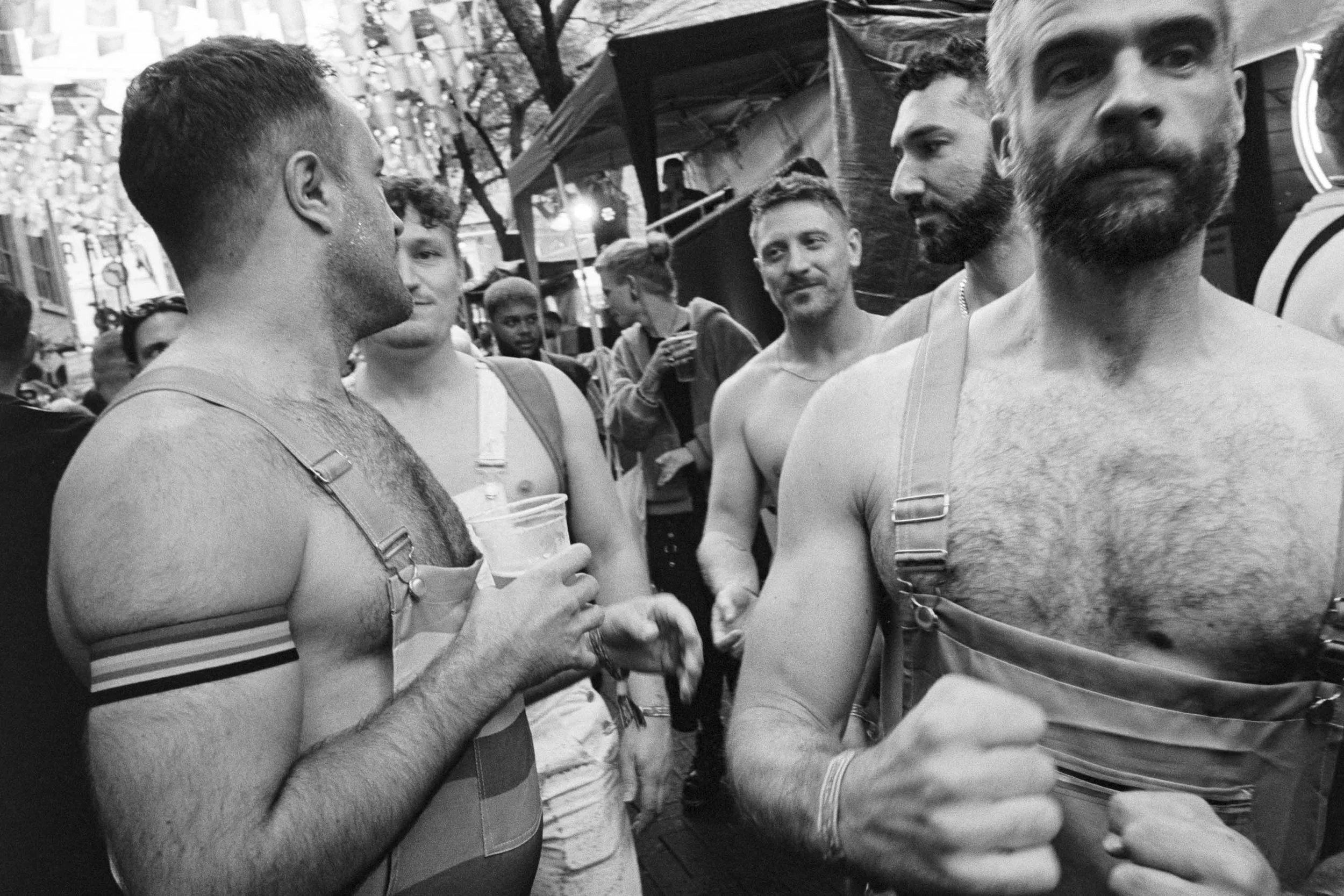
Robert Watson, Manchester Pride. 2026
Shooting film adds another layer to the complexity of street photography wherever I’m doing it. It is a complication though that helps me work harder. I don’t know until I have the film back in the darkroom and get it developed if the difficult situation I put myself in to potentially make a great photo actually was worth the effort. There is no screen on the back of my camera to tell me whether the expression I saw for that fraction of a second actually survived the shutter. Sometimes it has. Sometimes it hasn't. Martin Parr said once that he felt satisfied if he captured one good street photograph a year. If I were to be using a digital camera and I saw that I had captured something special or unique, I would relax. But as I can’t check (looking at the rear screen of a digital camera to check a picture is called chimping) I have to keep pushing, keep looking for the next potential great picture. During a day’s shooting, I never have that satisfied feeling. That comes in the darkroom after the rolls of film have been developed.
A bonus is that occasionally, something I didn't consciously see at the time is there in the frame when I come to look at the negative closely. It is rare, but sometimes a face in the corner of a picture, an expression that you didn’t notice can elevate a good picture to a great one.
One year I tried photographing Pride at night with flash. Almost the entire first night's work was ruined because the flash wasn't synchronising with the shutter properly. I went back the following evening, fixed the problem and shot another six rolls. Some of the photographs from that night became my favourites from any Pride anywhere. It was a useful reminder that street photography rarely follows the plan you had when you left the house.
Sometimes photographing in such crowded arenas like Pride can be frightening. Manchester Pride is all based around Canal Street. It’s quite narrow with clubs and bars on one side and a walled off canal on the other. One year, Canal Street was far too crowded. It had reached a point where movement had stopped. Everyone around me was drunk and singing. I was stone cold sober. I’m pretty sure I was the only one thinking about safety. With overcrowded bars to the right of me and pop up bars along the side of the canal to my left, if anything would have happened that required evacuation then there was no escape route for thousands of people. However, I kept taking photographs. People weren’t reacting to the camera in the same way as usual. You could see in their faces that things weren’t normal. They were drunk though, I was sober and questioning my choices. However, being shoulder to shoulder with people gave me just a fraction more time. By that, I mean perhaps a second rather than half a second to frame and take the picture before someone noticed what I was doing and react as they usually do. Surprisingly, being in this situation resulted in some of my favourite photographs I’ve ever taken at Manchester Pride. Is it because I remember the thoughts running through my head though? My memory of the place I was and how I felt at the time I pressed the shutter can seriously influence how I feel about a photograph. That is something impossible to transfer to a person viewing a picture on a gallery wall.
When I think about a book of my street photography, it is the quieter moments that find themselves at the forefront of my mind. The moment of normality in a persons actions before they realise they are being photographed and react to the camera. A book of Pride photographs will always have to contain both. The quiet, candid moments and the wild subconscious reactions are equally part of the celebration of love and life.
